WAQF HERITAGE AT HERITAGE ISTANBUL 2026
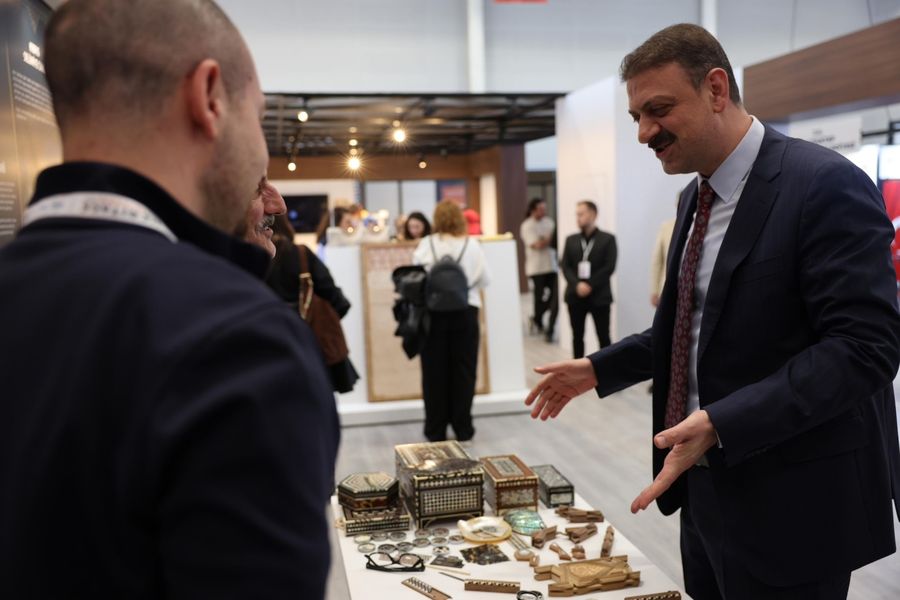
The Heritage Istanbul Restoration, Archaeology, Museology, and Library Technologies Fair and Conference, organized with the support of the Ministry of Culture and Tourism, the Directorate of National Palaces, our Directorate General, the Directorate General of Cultural Heritage and Museums, and the Istanbul Governorate, has opened at the Yenikapı Eurasia Exhibition and Convention Center for its ninth edition this year.
Held under the slogan “Secure the Future for the Past,” the event is expected to host over 150 companies from the public and private sectors. The fair, which opened its doors today and is expected to welcome more than 10,000 visitors, will be open from April 1 to April 4.
RESTORATION PROCESSES OF OUR WAQF MONUMENTS PRESENTED
At the fair, our Directorate General is presenting its restoration activities carried out both domestically and internationally at its exhibition stand. The stand features applied workshops and demonstrations, including tile-making, kündekâri (traditional woodwork), and decorative painting (kalem işi), as well as innovative presentations on movable cultural assets.
In addition, original architectural elements uncovered during the restoration of the Sultanahmet Mosque are on display. Restoration processes of numerous waqf monuments—particularly those affected by the 6 February earthquakes—are also presented to visitors through project, implementation, and outcome visuals. These include the Kurtuluş Mosque, Şirvani Mosque, and Zincirli Bedesten in Gaziantep; the Habib-i Neccar Mosque, Kuseyri Houses, and Kurşunlu Inn in Hatay; and the İsa Divanlı Mosque, Duraklı Mosque, and Ulu Mosque in Kahramanmaraş, among many others.
“MINIMUM INTERVENTION, MAXIMUM CONSERVATION”
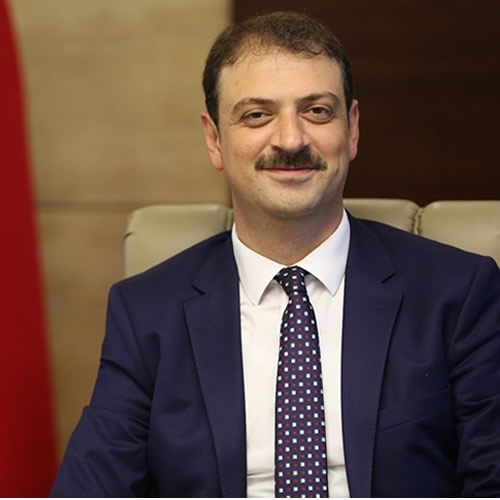
In his speech at the conference, our Director General Mr. Sinan Aksu emphasized that a significant portion of cultural assets consists of waqf monuments:
“With its deep-rooted history, one of the most important responsibilities of the Directorate General of Foundations is to preserve and sustain this heritage. We place science at the center of our processes. Our guiding principle in restoration is very clear: ‘Minimum intervention, maximum conservation.’ All our works are carried out in compliance with both national legislation and internationally recognized principles. Today, restoration works are ongoing at numerous sites across our country—from Istanbul to İzmir, from Aksaray to Bitlis, and across many other provinces—covering a total of 101 waqf cultural assets. In addition, we completed the restoration of 131 monuments in 2025 alone.”
“WE CONDUCTED ANALYSES USING ADVANCED TECHNOLOGIES AT HAGIA SOPHIA”
Referring to the ongoing works at the Hagia Sophia Grand Mosque, Mr. Aksu stated:
“We are conducting a highly comprehensive and meticulous process at Hagia Sophia. Extensive scaffolding has been installed on the façades and minarets. Through detailed analyses, we identified certain later interventions that were harmful to the structure and carefully removed them. Cleaning works on the marble surfaces are currently ongoing. Furthermore, we have revealed traces of different historical periods of the structure through scientific analyses. Based on these findings, we have begun producing materials appropriate to those periods and using them in the restoration process. To enhance the structural durability, we also carried out advanced technological analyses and prepared reinforcement projects.”
164 MONUMENTS IN THE EARTHQUAKE REGION RESTORED
Emphasizing the efforts undertaken following the Kahramanmaraş-centered earthquakes of 6 February, Mr. Aksu stated:
“Damage assessment studies were carried out by our teams, and all data were systematically recorded. Necessary safety measures were taken to protect the damaged waqf cultural assets. As a result of the evaluations, a total of 678 waqf cultural assets across 11 provinces were assessed: 31 were destroyed, 144 heavily damaged, 104 moderately damaged, 98 slightly damaged, and 301 undamaged. All damaged structures were included in restoration programs. To date, the restoration of 164 monuments has been completed, and many more are planned to be finalized in 2026.
Restoration works have also been carried out on places of worship owned by the Directorate General and used by non-Muslim communities. In this context, the restoration of a total of 19 churches, synagogues, and Jewish prayer houses (havras) in various provinces has been completed. Restoration works on some other places of worship damaged in the earthquakes are still ongoing.”
WAQF HERITAGE AT HERITAGE ISTANBUL 2026